
In the world of industrial and mechanical systems, ensuring smooth and reliable power transmission is crucial. That’s where couplings come in. Electric motor couplings may seem small, but they play a vital role in connecting a motor to a driven load.

In this article, we’ll explore the types of electric motor couplings, their key applications, factors to consider when selecting the proper coupling, and maintenance tips to ensure long-term performance.
Whether you’re an engineer, technician, or industry professional, understanding couplings is essential to optimizing your machinery and preventing costly downtime.
What is an electric motor coupling?
An electric motor coupling is a mechanical device that connects the shaft of an electric motor to another rotating shaft, such as a pump, gearbox, or conveyor. It allows for the transmission of torque while absorbing slight misalignment and shock.
In addition, couplings help reduce vibration and protect both the motor and the attached equipment from mechanical stress.
Construction
Motor couplings vary in design based on their type and application. They can be rigid for precise alignment or flexible to accommodate some movement and absorb operational vibrations. Commonly used materials include steel, cast iron, aluminum, and elastomeric elements for flexibility.
Importance in motor systems
Without proper coupling, misalignment between shafts can lead to wear, mechanical failure, or operational inefficiency. Thus, couplings play a vital role in extending the life of motors and machinery while ensuring smooth and uninterrupted operation.

Types of Electric Motor Couplings
Understanding the different types of electric motor couplings is crucial for selecting the right solution for your machinery. At Zhenli Motor, we offer a range of couplings designed to meet various industrial needs. Below are the main types and their typical applications.
Rigid Couplings
Rigid couplings are solid connectors that join two shafts directly, transmitting torque without accommodating any misalignment.
Typical use: Ideal for applications with perfectly aligned shafts, such as precision machine tools or CNC equipment.
Advantages:
- High torque transmission efficiency
- Simple design and low cost
Limitations:
- Cannot tolerate misalignment
- Transfers vibration and shock to connected equipment
Example: High-precision lathes often use rigid couplings for exact alignment.
Types of Rigid Coupling
- Gear Couplings:
Construction: Two hubs with external teeth mesh with internal teeth in a sleeve. The teeth allow relative motion between shafts.
Flexibility & Vibration Absorption: Handles angular, parallel, and axial misalignments; absorbs shock and vibration through the meshing teeth. Requires lubrication to prevent wear.
Typical Applications: Heavy-duty pumps, compressors, steel mills, and large industrial machinery.
Maintenance: Regular lubrication and inspection are needed to ensure long-term reliability. - Grid Couplings
Construction: A metal grid fits between two hubs with grooves, transmitting torque while allowing slight flexing.
Flexibility & Vibration Absorption: Can handle angular and parallel misalignments; absorbs shock loads and dampens vibrations efficiently. Lubrication helps reduce wear and extends lifespan.
Typical Applications: Crushers, mills, and other high-torque industrial equipment.
Maintenance: Periodic lubrication and grid inspection are essential to prevent fatigue and failure.
Flexible Couplings
Flexible couplings are designed to compensate for various types of misalignment, including axial, angular, and parallel. They can also absorb vibrations and shocks. This makes them suitable for applications where alignment cannot be guaranteed or where dynamic loads are present.
Typical use: Common in pumps, fans, and conveyors where minor misalignments may occur.
Advantages:
- Reduces stress on bearings and shafts
- Dampens vibration and shock
Limitations:
- Slightly higher cost than rigid couplings
- Maintenance may be required depending on the design
Example: Industrial water pumps often use flexible couplings to compensate for shaft movement.
Types of Flexible Coupling:
- Jaw (Elastomeric) Couplings
Jaw couplings consist of two metal hubs with an elastomeric insert (spider) between them to absorb shocks and vibrations.
Advantages: These couplings offer excellent vibration damping and protect machinery from sudden torque spikes. It is also easy to maintain and replace.
Typical use: Light-to-medium torque applications such as packaging machines, fans, and small motors. - Tire Couplings
Construction: Rubber or synthetic “tire” bonded between metal hubs.
Flexibility & Vibration Absorption: The elastic tire flexes under misalignment and effectively absorbs vibration.
Typical Applications: Pumps, blowers, and other equipment requiring smooth torque transmission and vibration damping. - Disc Couplings
Construction: Thin metal discs (often stainless steel) stacked in a series between hubs.
Flexibility & Vibration Absorption: Flexibility comes from the discs’ bending, which allows angular and axial misalignment while maintaining precise torque transmission. Minimal vibration absorption compared to elastomeric types, but highly precise.
Typical Applications: High-speed spindles, robotics, and precision machinery. - Diaphragm Couplings
Construction: Metal diaphragms (thin, flexible plates) connect two hubs.
Flexibility & Vibration Absorption: Can handle angular, axial, and parallel misalignments with minimal backlash. Absorbs some vibration but focuses on precise torque transfer.
Typical Applications: Turbines, generators, and aerospace equipment requiring high precision and reliability.
Specialized Couplings
Specialized couplings include magnetic, fluid, and disc types designed for unique operational needs, such as high precision, safety isolation, or contactless torque transfer.
Typical use: Robotics, chemical processing, or other systems requiring precise or isolated torque transfer.
Advantages:
- Can address specific requirements like vibration isolation or maintenance-free operation
- Some types, like magnetic couplings, are completely contactless
Limitations:
- Usually more expensive
- May require specialized installation
Example: Magnetic couplings in sealed pumps prevent leaks in chemical plants.
Selecting the right coupling type ensures optimal efficiency, safety, and longevity of your machinery across a wide range of industrial applications.

Key Functions of Electric Motor Couplings
Electric motor couplings serve as more than just simple connectors between a motor and a driven load. Its design helps improve system efficiency, reduce wear, and increase operational safety.
Power and Torque Transmission
The primary function of a coupling is to transmit power and torque from the electric motor to the driven equipment efficiently. By securely connecting two shafts, couplings ensure that rotational energy is transferred without significant loss, enabling machinery to operate reliably and at its intended performance level.
Misalignment Compensation
Even with precise installation, some degree of misalignment is inevitable due to thermal expansion, vibration, or equipment settling. Flexible couplings can accommodate axial (in-line), angular (tilt), and parallel (offset) misalignment without causing excessive wear.
Shock and Vibration Absorption
Couplings also act as buffers, absorbing shocks and vibrations generated by sudden load changes, motor starts, or irregular operation. This protective function minimizes the risk of damage to sensitive equipment and improves overall system stability, leading to smoother operation and longer equipment life.
Overload protection
Some couplings are designed to act as torque limiters. In the event of an overload, they slip or disengage to prevent damage to the motor or driven equipment, offering an additional layer of protection.
Maintenance and installation assistance
Couplings also simplify the assembly and disassembly of systems. They allow machinery to be serviced or aligned without the need to dismantle the entire setup.
Factors to Consider When Choosing a Coupling
Selecting the proper coupling is critical to ensure efficient power transmission, equipment safety, and long-term reliability. Several key factors should guide engineers and technicians in making the best choice for their specific application.
Operating Requirements
The coupling must be able to handle the required torque and rotational speed of the system. High-torque or high-speed applications may need more robust couplings, such as gear or disc types, while lower-torque systems can use elastomeric or jaw couplings. Always check the manufacturer’s torque and speed ratings to ensure safe operation.
Misalignment Tolerance
Different couplings can accommodate varying degrees of angular, parallel, and axial misalignment. Assess the expected misalignment in your system:
- Angular misalignment: Shafts are at a slight angle.
- Parallel misalignment: Shafts are offset but remain parallel.
- Axial misalignment: Shafts move closer or farther along their axis.
Choosing a coupling that can handle these misalignments reduces stress on shafts and bearings and prevents premature failure.
Environmental Factors
Consider the operating environment, including temperature, humidity, chemical exposure, and dust. Materials such as stainless steel or composites are better for corrosive or outdoor environments, while elastomeric elements may degrade in high heat.
Maintenance and Lifespan
Decide whether you prefer lubricated or non-lubricated couplings. Lubricated mechanical couplings like gear and grid types offer high torque capacity but require regular maintenance.
Non-lubricated elastomeric or disc couplings are lower-maintenance but may have torque or misalignment limitations. Understanding the expected lifespan and maintenance schedule helps prevent unexpected downtime.
Space Constraints
Assess available space for the coupling, including bore size, hub diameter, and overall length. Compact applications may require smaller, flexible couplings, while larger industrial systems may accommodate robust designs. Ensuring proper fit prevents installation issues and alignment problems.
Cost Considerations
While it may be tempting to choose the lowest-cost coupling, balance price with expected lifespan, maintenance needs, and reliability. Investing in a slightly higher-priced coupling can reduce downtime, maintenance costs, and equipment damage over time.
Practical Advice:
- Always consult manufacturer specifications to match torque, speed, and misalignment ratings.
- Consider future maintenance access and ease of replacement.
- For critical machinery, prioritize reliability and alignment compensation over initial cost.
Common Problems and Maintenance Tips
Even the most reliable couplings can experience issues if not properly maintained. Understanding common problems and following regular maintenance routines can prevent unexpected downtime and extend the life of your equipment.
Signs of Wear or Failure
Couplings show early warning signs when they start to wear out or fail. Common indicators include:
- Excessive vibration during operation
- Unusual noise, such as clicking, grinding, or rattling
- Excessive heat generated at the coupling area
- Visible wear or cracks in elastomeric components, discs, or hubs
Recognizing these signs early allows for timely intervention before more serious damage occurs.
Importance of Regular Inspection
Routine inspections are essential for all types of couplings. Check for alignment, wear, cracks, and any signs of loosening. For elastomeric couplings, inspect the rubber or polymer components for deterioration. For metal couplings, examine teeth, discs, or grids for fatigue or deformation. Regular inspection helps identify minor issues before they escalate into costly failures.
Lubrication and Alignment Checks
Mechanical-flexing couplings like gear and grid types require proper lubrication to prevent wear and overheating. Follow manufacturer guidelines for lubrication intervals and types of grease or oil. Additionally, verify that shafts remain properly aligned during operation. Misalignment is a leading cause of premature coupling failure and can also damage connected equipment.
Guidelines on When to Replace a Coupling
A coupling should be replaced if:
- Wear or damage is visible on critical components
- Misalignment cannot be corrected without excessive stress
- Vibration, noise, or heat persists even after maintenance
- Maintenance becomes frequent and costly, reducing overall system efficiency
Keep detailed records of inspection, alignment, replacement, and lubrication schedules. This helps identify recurring problems and plan preventive measures before problems arise.
Applications of Electric Motor Couplings
Electric motor couplings are essential components in a wide range of applications. They provide reliable power transmission, misalignment compensation, and protection against vibration and shock. Below are some of the most common applications and why couplings are critical in each.
Industrial Machinery
Couplings are widely used in heavy industrial machinery, including CNC machines, lathes, and milling equipment. Precision machines require low-backlash or zero-backlash couplings to transmit power without lost motion. They transmit torque from the motor to the machine components while accommodating slight misalignments, protecting sensitive shafts and bearings, and ensuring smooth, precise operation.
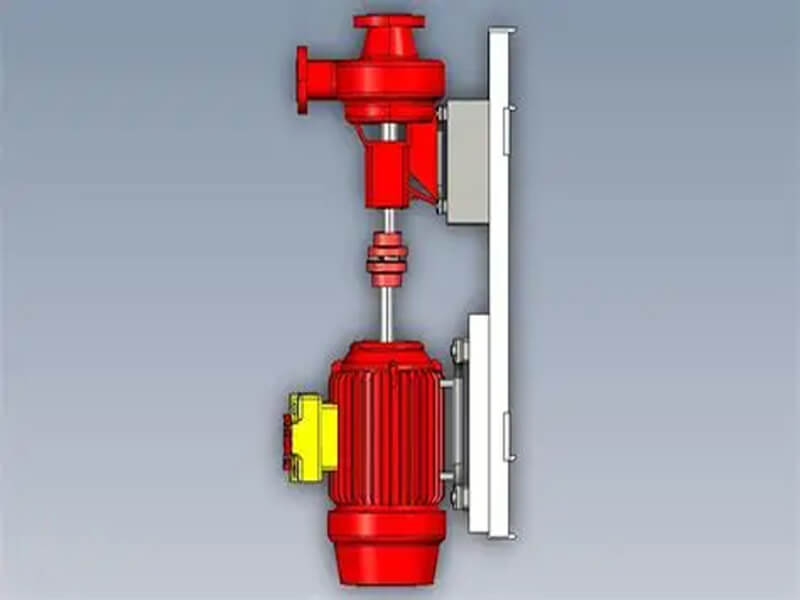
Pumps, Compressors, and Fans
In pumps, compressors, and fans, a coupling connects the motor to the rotating equipment. It ensures efficient energy transfer while absorbing vibrations and shocks caused by sudden starts or load fluctuations. Flexible couplings are fundamental here, as they reduce bearing stress and prevent mechanical damage in high-speed rotating systems.
Conveyors and Manufacturing Equipment
Conveyors, assembly lines, and other manufacturing machinery rely on couplings to maintain alignment and smooth power transmission across connected shafts. Jaw or elastomeric couplings are commonly used to minimize vibration, reduce noise, and protect machinery from sudden torque spikes, ensuring continuous production without interruptions.
Renewable Energy Systems (e.g., Wind Turbines)
In wind turbines and other renewable energy systems, couplings transfer torque from the turbine rotor to generators while compensating for shaft misalignment and absorbing shocks caused by fluctuating wind loads. High-precision couplings like disc or diaphragm types ensure reliable, long-term operation, which is critical in systems where downtime can be costly.
Mixers and agitators
Industries such as food, pharmaceutical, and chemical processing use couplings in mixers to handle dynamic loads, minor misalignment, and fluctuating torques during mixing cycles.
Materials used in motor couplings
The performance and durability of an electric motor coupling are highly dependent on the materials used in its construction. Each material offers unique advantages, making it suitable for specific applications and operating conditions.
Steel
Steel is a standard material for heavy-duty couplings. It offers high strength, excellent torque transmission, and durability. Steel couplings are ideal for industrial environments where high loads and continuous operation are expected.
Cast iron
Cast iron is often used in general-purpose rigid and flange couplings. It is strong, cost-effective, and has good wear resistance. However, it is more brittle than steel and is less suitable for high-shock or high-vibration settings.
Aluminum
Aluminum is best for applications where weight is an issue or when the connection is exposed to moisture, since it is lightweight and resistant to corrosion. It is commonly used in small machines and precision applications.
Elastomers (plastics and rubber)
Elastomeric materials, such as rubber or plastic, are frequently used in flexible couplings. These materials aid in noise reduction, accommodate misalignment, and absorb vibration. They are commonly seen in Oldham couplings, spider couplings, and jaw couplings.
Composite materials
Modern couplings can also use advanced composite materials. They are lightweight, strong, and corrosion-resistant, and are often used in specialized or high-performance applications such as aerospace or precision automation.
Conclusion
Electric motor couplings play a crucial role in ensuring smooth and reliable power transmission between motors and driven equipment. By selecting the right type, maintaining proper alignment, and performing regular inspections, you can enhance system performance, minimize wear, and prolong the equipment’s lifespan. A well-maintained coupling is crucial for ensuring consistent and safe operation in any mechanical system.
At Zhenli Motor, we understand that a high-quality electric motor coupling is an investment in your machinery’s performance and longevity. We encourage engineers to consult with experts when selecting couplings to ensure optimal performance for their specific applications.
Take action today—contact Zhenli Motor to find the perfect coupling solution for your machinery and maximize efficiency, safety, and reliability.
FAQs
How do I know if my electric motor coupling is failing?
Common symptoms of coupling failure include unusual vibration, noise, misalignment, visible wear, or heat buildup in the coupling area.
Can I run a motor without a coupling?
You can only run a motor without a coupling if it is directly connected to the load with a perfectly aligned shaft. In most cases, this is impractical because couplings are needed to handle misalignment and movement.
How often should I inspect my motor coupling?
Inspections should be performed at least every 3 to 6 months, or more frequently as the application demands. For best results, follow the manufacturer’s maintenance schedule.
Are flexible couplings better than rigid?
Each has its use. Flexible couplings are ideal for systems with misalignment or vibration, while rigid couplings are best for precisely aligned, inflexible systems that require maximum torque transmission.