
From the moment you wake up and switch on a fan to the drive home in an electric vehicle, electric motors are quietly powering modern life. These machines, often unnoticed, are the backbone of contemporary industry, driving everything from household appliances to advanced industrial equipment and electric cars. An electric motor is a machine that converts electrical energy into mechanical energy, making movement possible in countless systems around us.

Designing an electric motor is a complex process that requires balancing efficiency, performance, cost, size, and durability. Behind this simple yet powerful function lies electric motor design—the engineering process of creating motors that meet specific performance, efficiency, and durability requirements. This design discipline is crucial across industries, driving innovation in automotive technology, ensuring reliability in appliances, and enabling progress in renewable energy solutions.
In this article, we will explore the fundamental principles of electric motor design, the factors that influence performance, and the future outlook for this vital technology that shapes our world.
Understanding the basics of electric motor operation
At the heart of every electric motor lies a simple but powerful principle: the conversion of electrical energy into mechanical energy through electromagnetism. When electric current flows through a conductor in the presence of a magnetic field, it experiences a mechanical force (the Lorentz force). Electric motors harness this force to generate rotational motion, which can then be used to drive machines and power tools, or to propel vehicles. The concept of electromagnetic induction is the foundation of this operation, making electric motors essential across industries and daily life.
Types of electric motors
AC motors
These are widely used in industrial machinery, household appliances, and HVAC systems and are powered by alternating current.
- Induction motors: Reliable and cost-effective, they use electromagnetic induction to generate current in the rotor and are often found in pumps, fans, and conveyors.
- Synchronous motors: Maintain a constant speed regardless of load, making them ideal for precision applications such as robotics and process control.
DC motors
Powered by direct current, they are valued for excellent speed control.
- Brushed DC motors: Simple and affordable but require regular maintenance; often used in toys, small appliances, and automotive applications.
- Brushless DC motors (BLDC): More efficient and durable, making them ideal for drones, electric vehicles, and computer cooling fans.
- Stepper motors are designed for precise position control and are commonly applied in CNC machines, 3D printers, and camera systems.
Each motor type is suited to different operational requirements. Understanding the application context is crucial when determining which motor design to pursue.
Key performance metrics
To evaluate and compare motor performance, engineers consider several critical metrics:
- Torque: The twisting force a motor generates, essential for applications requiring lifting or heavy loads.
- Speed: How fast the motor rotates, typically measured in revolutions per minute (RPM).
- Power: The overall output, reflecting how much work the motor can perform over time.
- Efficiency: The ratio of mechanical output to electrical input, showing how effectively the motor converts energy.
By focusing on torque, speed, power, and efficiency, motor design ensures consistent performance and supports a wide range of industrial and commercial applications.
Motor types and their design variations
Different applications require distinct motor types, each with unique design considerations:
- Induction motors: Widely used in industries for their simplicity and robustness. Design factors include rotor bar shape, slot skew, and lamination thickness.
- Permanent magnet motors: Known for high torque density, ideal for EVs, robotics, and appliances. Key design aspects include magnet type (e.g., neodymium), placement (surface vs. embedded), and thermal resistance.
- Switched reluctance motors (SRMs): Valued for durability and low cost. Designers focus on minimizing torque ripple and noise through rotor shape optimization and advanced control algorithms.
- Stepper motors: Used for precise position control in CNC machines, 3D printers, and cameras, requiring accuracy in both design and control.
Basic components of an electric motor
Every electric motor consists of several core components that work together to convert electrical energy into mechanical motion. The design and material choices for each part directly impact performance, efficiency, cost, and durability.
Stator
The stator is the stationary part of the motor that generates the magnetic field. AC motors contain copper windings arranged in slots, which, when energized, produce a rotating magnetic field. In permanent magnet motors, the stator works in combination with high-performance magnets. The stator’s design — including the number of poles, winding distribution, and slot geometry — significantly influences efficiency and torque output.
Rotor
Located inside the stator, the rotor is the moving part that produces mechanical motion when interacting with the stator’s magnetic field. Depending on the motor type, it may contain conductive bars (as in squirrel-cage induction motors), windings (in wound rotors), or embedded/surface-mounted permanent magnets. Rotor design directly affects torque, efficiency, and operational smoothness.
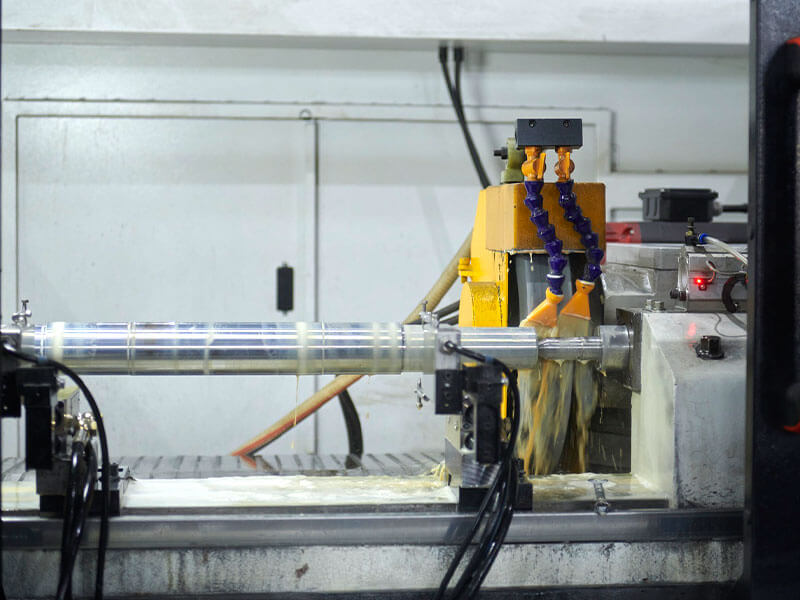
Windings and permanent magnets
Windings, usually made of copper for its high conductivity, are critical in defining a motor’s torque, speed, and efficiency. Aluminum can be used as a cost-effective alternative. In motors like BLDC and stepper motors, permanent magnets — often neodymium — provide strong magnetic fields, enabling compact, high-torque, and high-efficiency designs.
Commutator and brushes/slip rings
In brushed DC motors, the commutator and brushes reverse the current direction through the armature windings, ensuring continuous rotation. In some AC motors, slip rings provide an electrical connection to the rotor. These components are simple and effective but wear over time, requiring maintenance or replacement.
Bearings, shaft, and housing
- Bearings: Support the rotor shaft, enabling smooth rotation with minimal friction; high-quality bearings extend service life and reduce noise.
- Shaft: Transmits torque to the load and must be designed to handle stress and alignment.
- Housing: Protects internal components from dust, heat, and vibration, while providing structural support.
Cooling system
Motors generate heat during operation, and effective cooling is crucial for performance and longevity. Depending on the application, cooling may involve air vents, fans, or liquid cooling systems. Proper thermal management ensures reliability and prevents overheating.
Magnetic circuit design
A motor’s torque generation and efficiency are determined by the design of the magnetic circuit, which moves the magnetic flux from the stator to the rotor and back.
Magnetic materials
Magnetic cores are usually made of laminated silicon steel to reduce eddy current losses. Lamination reduces induced currents that cause heating and inefficiency. High-grade electrical steel with maximum permeability and low core losses is selected for high-efficiency motors.
Air gap optimization
The air gap is the small space between the rotor and stator. Reducing this gap increases magnetic coupling and torque, but it must be large enough to avoid physical contact during thermal expansion or shaft misalignment. The size of the air gap is a key factor in determining performance and requires precise engineering.
Electrical circuit design
The electrical circuit of a motor includes the windings, the insulation system, and the overall current paths that control electromagnetic interactions.
Winding configuration
Winding patterns can be:
- Lap winding: Used for low-voltage, high-current applications.
- Wave winding: Used for high-voltage, low-current applications.
The windings can be distributed over several stator slots or concentrated in a few slots, depending on torque and space requirements. The number of coil turns, wire gauge, and winding arrangement directly affect the magnetic field and, in turn, the motor’s efficiency.
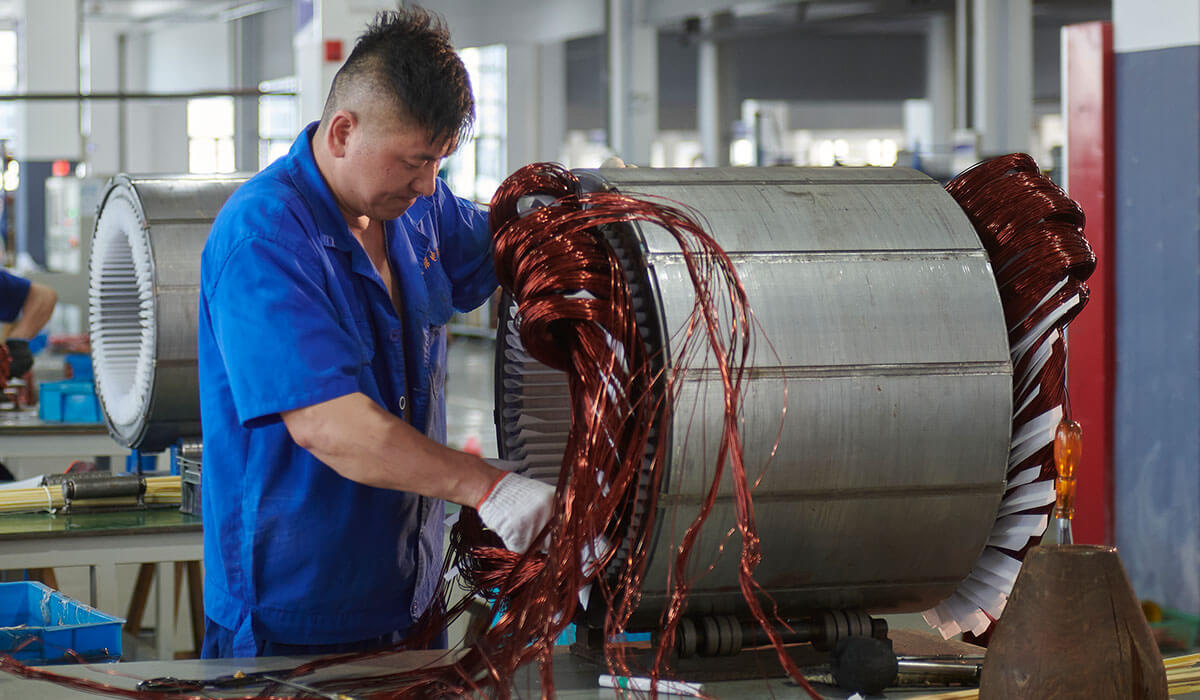
Voltage and current ratings
A motor must be designed for a specific voltage and current level. Operating outside these limits can result in overheating or reduced efficiency. Motor designers must match the winding resistance, inductance, and thermal capacity to the electrical input.
Insulation and thermal ratings
The windings must be insulated with materials that can withstand high temperatures and electrical stresses. Standard insulation classes include Class B (130°C), Class F (155°C), and Class H (180°C). The choice depends on the application and expected thermal load.
Mechanical design considerations
While electromagnetic performance is critical, the motor’s physical integrity and layout are equally essential for reliability and ease of use.
Housing and frame
The outer casing supports the motor structure, protects the internal parts from dust and moisture, and facilitates heat dissipation. Industrial motors often use TEFC (totally enclosed fan-cooled) or ODP (open drip-proof) designs for environmental protection.
Cooling system
Heat is a byproduct of energy conversion. Cooling methods include:
- Natural ventilation: used in small motors.
- Forced air cooling: achieved using fans.
- Liquid cooling: used in high-efficiency motors and EVs.
Efficient thermal design prevents winding damage and extends motor life.
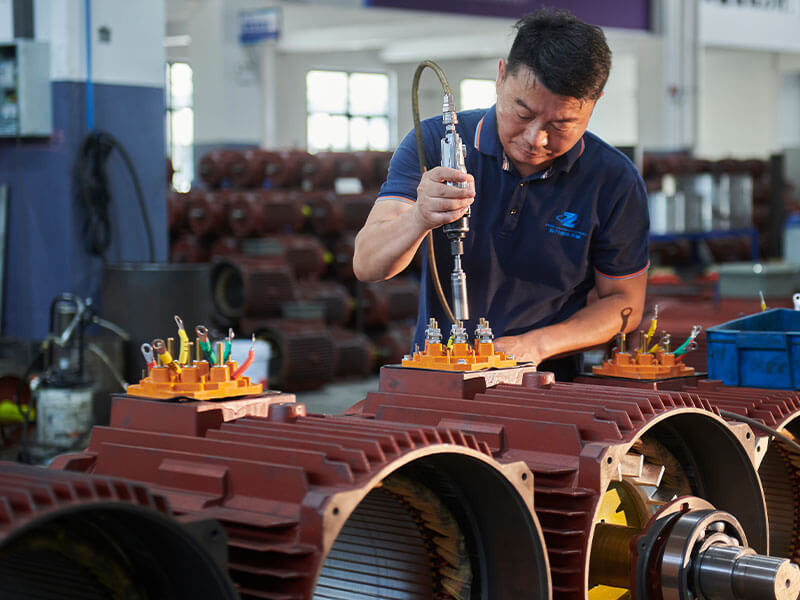
Vibration and noise reduction
Vibration can cause wear and operational problems. Designers reduce these by using rotor balance, accurate alignment, and vibration-damping materials. Enclosures and insulation also help minimise audible noise.
Control systems and feedback mechanisms
Electric motor control has advanced significantly with the rise of digital electronics, which enables more accurate and efficient operation.
- VFDs, or variable frequency drives: By altering the supply frequency, VFDs regulate the torque and speed of AC motors. They increase motor efficiency, reduce energy consumption, and provide smooth starting, making them essential for industrial automation.
- Pulse width modulation (PWM): PWM is used in DC motor controllers to adjust the effective voltage applied to the motor. By switching quickly between on and off states, PWM ensures efficient speed control with minimal energy loss.
- Feedback sensors: Position and speed sensors, such as optical encoders, resolvers, or Hall effect sensors, provide data for closed-loop control systems. This feedback enables precise control of motor behaviour, especially in robotics and CNC machines.
Design for efficiency and performance
As energy efficiency has become a global priority, designing high-efficiency motors is more critical than ever.
Performance standards
Electric motors are classified according to standards such as:
| Classification | Efficiency level |
|---|---|
| IE1 | Standard efficiency |
| IE2 | High efficiency |
| IE3 | Premium efficiency |
| IE4 | Super premium efficiency |
High-efficiency motors use less energy and reduce operating costs, especially in applications with continuous operation.
Minimising losses
Designers reduce energy losses by:
- Copper losses: By optimising the thickness and arrangement of the windings.
- Iron losses: Using low-loss steel and optimal lamination thickness.
- Mechanical losses: Using precision bearings and smooth surfaces.
Load matching
Designing a motor for the expected load profile improves both efficiency and lifespan. Large motors use unnecessary energy, while undersized motors overheat and fail prematurely.
Electric motor design applications and customization
Each industry has unique motor requirements, and customization plays a key role in motor selection and design.
Automotive industry
Electric vehicles (EVs) require compact motors with high power density and efficient thermal management. Motors are often integrated with transmission systems and regenerative braking.
Industrial applications
Industries require motors that can operate in dusty, hot, or humid environments. Custom designs can include stainless steel frames, explosion-proof housings, or built-in overload protection.
Aerospace and robotics
Lightweight materials and compact form factors are essential in aerospace and robotic applications. Brushless DC motors are ideal due to their high efficiency and reliability, as well as their precise control mechanisms.

Conclusion
Designing an electric motor is a multifaceted challenge that requires careful attention to electromagnetic principles, mechanical structure, thermal management, and control systems. Every detail — from stators, rotors, and windings to efficiency, torque, and material selection — directly shapes performance, cost, and durability. Engineers must also address ongoing challenges such as cost-performance trade-offs, reliance on rare earth materials, and compliance with strict global standards.
At the same time, advanced design trends — including IE4 and IE5 efficiency standards, AI-driven simulations, smart motors, and eco-friendly materials — are paving the way for a more electrified and sustainable future. Whether it’s a small household fan motor or a powerful EV drive system, thoughtful design determines success and end-user satisfaction.
As a professional electric motor manufacturer in China, Zhenli Motor is committed to turning these principles into practice. By focusing on innovation, quality, and sustainability, we design motors that meet today’s demands while anticipating tomorrow’s opportunities. The future of electric motor design will be defined by continuous innovation, smarter integration, and sustainable solutions — and at Zhenli Motor, we are proud to be part of that journey.
Contact Zhenli Motor today to power your success with reliable and efficient motor solutions.