

Even the smallest part of an electric motor plays a vital role in its overall performance. A motor is only as reliable as its support system, and neglecting even minor components can compromise efficiency, stability, and lifespan. An often overlooked but critical part of a motor is the journal end. Although it may appear as a simple extension of the shaft, the journal end is fundamental to the mechanical integrity and operational stability of the motor.
In this article, we will explore the journal end in detail, covering its structure, function, types, maintenance, and common issues.
Understanding the electrical motor journal end
The journal end is the specific part of the motor shaft that extends into or out of the motor housing and is usually supported by bearings. The journal end is not a single spot but refers to the smooth, cylindrical surface of the shaft designed to interface perfectly with the bearings.
This part of the shaft is essential because it supports the rotor via bearings and serves as a mounting surface for couplings, pulleys, and other drive components. Any damage or misalignment in the journal end can lead to operational problems such as vibration, bearing failure, or loss of power.
Function and purpose of a motor journal end
The primary functions of electrical motor journal end revolve around maintaining stability, reducing friction, and handling mechanical loads.
Shaft and rotor support
The journal end provides a precise bearing surface, which, in turn, supports the rotor. This alignment is essential for smooth rotation and prevents unwanted shaft deflection or misalignment that could affect the motor’s performance.
Power transmission
The journal end is the key contact point where mechanical power is transferred from the motor shaft to external equipment. Whether connected to a pump, pulley, or gearbox, the journal end ensures efficient transfer of rotational energy to the application.
A poor-quality or misaligned journal end can reduce torque transmission efficiency and lead to premature wear or mechanical failure.
Load handling
The journal end is subjected to radial and axial loads during operation. These forces can come from belt tension, shaft misalignment, or associated machinery. By distributing these forces evenly across the bearing surface, the journal end helps prevent excessive wear and prolongs the motor’s lifespan.
Vibration reduction
A properly designed journal end minimizes vibration and oscillation during operation. Keeping the rotor steady within the stator ensures smoother operation, reduces noise, and protects other motor components from mechanical stress.
Lubrication and bearing interface
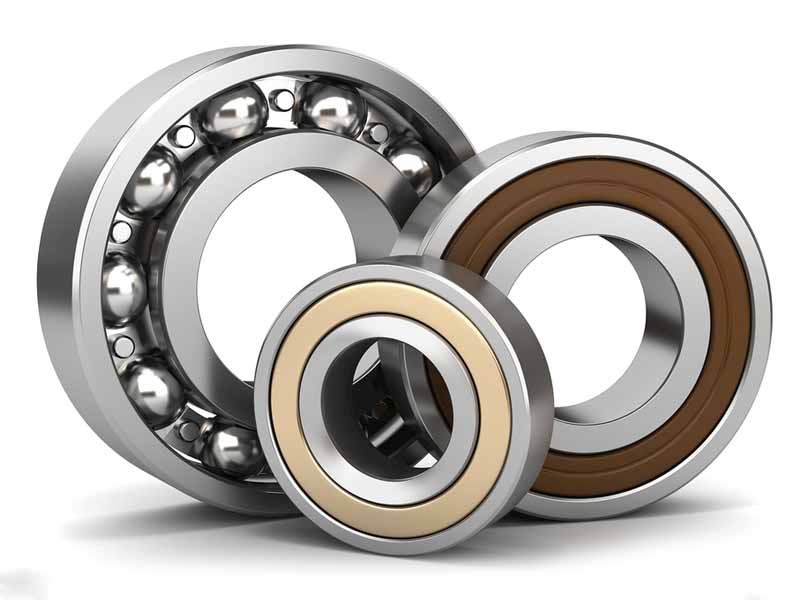
The journal end provides a precise interface for the bearings while facilitating lubrication. There are two main types of bearings that rely on the journal:
- Rolling Element Bearings: These use balls or rollers between the journal and the bearing race, reducing friction and allowing for high-speed rotation with minimal energy loss.
- Sleeve or Fluid-Film Bearings: These rely on a thin film of lubricant between the journal and bearing surface, distributing load and further reducing friction, often providing better vibration damping than rolling elements.
By combining proper load support, alignment, vibration reduction, and lubrication, the journal end ensures that the rotor spins consistently, efficiently, and with minimal wear.
Types of electrical motor journal ends
Motor journal ends come in a variety of types, each designed to meet specific operational requirements and load conditions. Understanding these types helps in selecting the right configuration for a motor’s intended application.
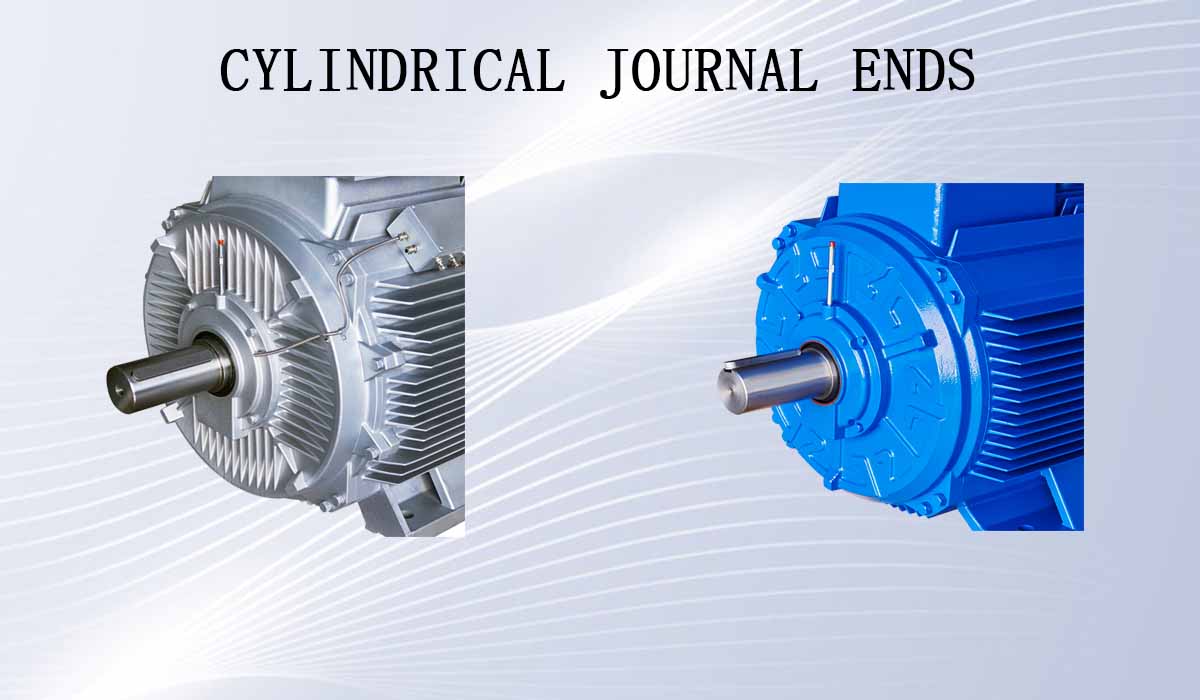
Cylindrical journal ends
Cylindrical journal ends have a straight, uniform diameter with a shaft extension. This is the most common type and is ideal for general-purpose motors and standard bearing fits.
These ends are suitable for a wide range of commercial and industrial applications, as they are easy to machine and maintain.
Tapered journal ends
Tapered ends gradually taper in diameter, providing a self-locking fit for couplings or bearings. This design ensures a tight connection and reduces slippage.
They are typically used in high-precision or heavy-load scenarios where secure mechanical contact is essential.
Flanged journal ends
Flanged journal ends feature a flat, wide section (flange) that can be fitted to the mating part. This design allows for easy mounting and axial positioning.
These ends are often used in large motors and assemblies that require tight alignment or where axial loads must be controlled.
Keyed journal ends
Keyed ends have a machined slot (keyway) that accepts a metal key. The key locks a coupling, gear, or pulley in place, preventing rotation between the shaft and the mounted component.
This type is widely used in applications that require torque transmission, such as conveyors, pumps, and fans.
By selecting the appropriate journal end, engineers can optimize performance, reduce maintenance requirements, and extend the lifespan of both the motor and the connected equipment.
Design, Materials, and Critical Tolerances for Journal End
The design and materials of an electrical motor journal end play a pivotal role in ensuring smooth operation, reliability, and long-term durability.
1. Length and Diameter Specifications
Each motor application has specific requirements for shaft size. The length and diameter of the electrical motor journal end must match the bearing and any attached components.
Incorrect dimensions can lead to misalignment, loose fittings, or interference with other parts of the system.
2. Material Selection
Journal ends are typically made from high-strength metals such as hardened steel or stainless steel. These materials were selected because they are strong, wear-resistant, and capable of withstanding significant mechanical stresses.
Some specialized motors may use corrosion-resistant or heat-treated alloys to enhance performance in extreme conditions.
3. Surface Finish
The electrical motor journal end should have an exceptionally smooth and consistent surface finish. This ensures proper interaction with the bearing, reducing friction, vibration, and wear.
Polishing the journal end provides a consistent, smooth interface for both rolling element and sleeve bearings.
4. Dimensional Accuracy and Geometric Tolerances
Critical tolerances, such as runout (deviation from true rotation) and ovality (deviation from a perfect circle), must be tightly controlled to ensure smooth rotation and even load distribution. Dimensional accuracy ensures that the journal properly supports the bearing and maintains rotor alignment within the stator.
By carefully designing the electrical motor journal end, selecting durable materials, and maintaining precise tolerances, you can ensure the motors operate efficiently with minimal maintenance.
Common Issues and Maintenance
Proper maintenance of the electrical motor journal end is essential for reliable motor performance and longevity. Understanding common issues and taking preventive measures can significantly reduce downtime and repair costs.
A. Signs of Wear or Failure
- Noise and Vibration: Unusual sounds or excessive vibration can indicate misalignment, bearing wear, or surface damage on the journal.
- Overheating: High temperatures at the electrical motor journal end may signal insufficient lubrication or excessive load.
- Surface Damage: Look for scoring, fretting, or electrical fluting on the journal surface, which can compromise bearing life and smooth operation.
B. Lubrication Problems
Insufficient, contaminated, or degraded lubricant can cause increased friction, wear, and bearing failure. Regularly check lubrication levels and replace grease or oil according to the motor manufacturer’s guidelines.
C. Discoloration Indicators
Journal ends that appear discolored (blue, brown, or black) often indicate excessive heat exposure, which can reduce shaft hardness and bearing performance. Replace worn or damaged journal ends promptly to prevent further motor damage.
Implement a preventive maintenance schedule including regular inspections of bearings, lubrication, alignment, and shaft surface condition.
D. Vibration Monitoring
Implementing a vibration monitoring system helps identify problems, such as imbalance, misalignment, or bearing failure, early. Unusual vibration levels often indicate issues with the electrical motor journal end or surrounding components.
Early detection enables preventative maintenance and prevents unexpected breakdowns.
Applications of Journal Ends in Motor Systems
Journal ends are used in a wide range of industries and motor-driven systems. Their ability to handle loads, transmit power, and maintain alignment makes them indispensable in both small-scale and heavy-duty operations.

1) Industrial Motors
Electrical motor journal ends in manufacturing and processing plants, where equipment such as conveyors, crushers, mixers, and compressors are essential components of motor-driven systems.
These motors often operate continuously under heavy loads, requiring strong and well-machined electrical motor journal ends to withstand the stresses.
2) HVAC Systems
Motors in HVAC systems rely on journal ends to drive fans, blowers, and pumps. Journal ends must ensure quiet, vibration-free operation to maintain air quality and system efficiency.
Improperly aligned or damaged journal ends in these systems can cause noise, inefficient airflow, and increased energy consumption.
3) Pump Drives
Pumps in water treatment, oil and gas, and chemical plants rely on electric motors with precision journal ends to drive the impeller. These applications often involve high radial and axial loads. A well-aligned journal end ensures consistent fluid flow and prevents unnecessary wear on seals and bearings.
4) Electric Vehicles (EVs)
In electric vehicle motors, journal ends must be compact, lightweight, and capable of withstanding high-speed rotation. They transmit torque to the axle or gear assemblies while maintaining smooth performance.
High-quality materials and surface finishes are often used to ensure minimal friction and high performance under driving conditions. The importance of the journal in motor rebuilding is undeniable.
Manufacturers like Zhenli Motor produce precision-engineered journal ends that perform reliably across these applications, helping industries reduce maintenance costs and avoid unplanned downtime.
Conclusion
The journal end is a small yet crucial component of an electric motor, playing a pivotal role in power transmission, bearing support, and overall mechanical stability. Proper design, alignment, and maintenance of the journal end ensure smooth operation, extended motor life, and reduced downtime. Paying attention to this critical component can significantly improve motor performance and reliability.
Zhenli Motor develops high-quality motors that support a range of journal-end configurations. Contact us today to discuss your motor needs and ensure optimal performance, reliability, and longevity for your equipment.
FAQs
What distinguishes a journal end from a motor shaft?
A motor shaft is the complete rotating component that transmits power from the motor’s rotor to external machinery. The journal end is the specific portion of the shaft that extends into or out of the motor housing to support rotation and allow attachments such as couplings or pulleys.
Can a worn or damaged journal be repaired?
Yes, a worn journal end can often be repaired by processes such as grinding, metal spraying, welding, or sleeving. The goal is to restore the original dimensions and surface finish to ensure a proper bearing fit and smooth operation.
Are all electrical motor journal ends keyed?
No, not all journal ends are keyed. Keyways are used only when torque needs to be transmitted to mounted components, such as pulleys or gears. Some applications use smooth or tapered journal ends in conjunction with other locking methods.
How often should the electrical motor journal ends be inspected?
The operational environment and motor usage determine how frequently the motor should be inspected. In industrial settings, it is advisable to inspect journal ends during each major maintenance cycle or whenever bearings are serviced or replaced.