
Electric motors are essential in today’s industry, and gear electric motors further enhance their performance by boosting torque and efficiency. These motors are widely used in automation, manufacturing, and various industrial applications where controlled speed and high torque are necessary.
A gear electric motor is a powerful combination of an electric motor and a gear system. The motor converts electrical energy into mechanical power, which is then passed through the gears to control speed, torque, and movement — making it ideal for a broad range of industrial and commercial uses.
In this guide, we’ll explore what gear electric motors are, the different types available, how they work, their key applications, maintenance tips, and how to choose the right one for your needs.
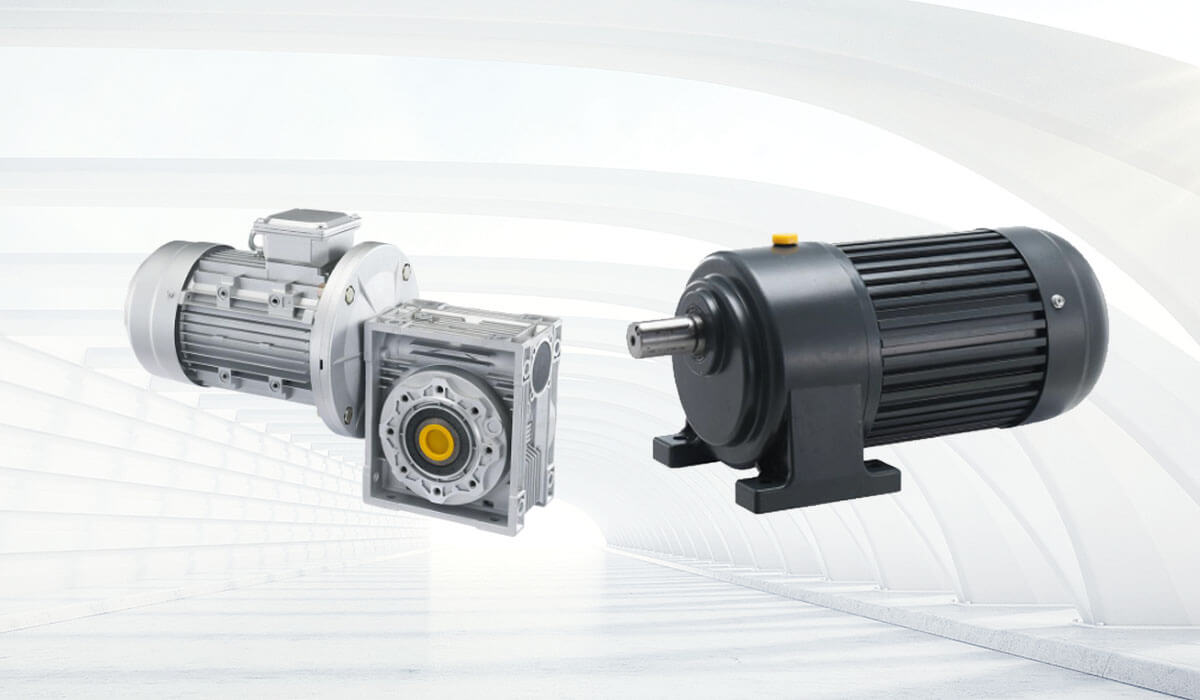
What is a gear electric motor?
A gear electric motor is an electric motor paired with a gearbox to adjust its speed and torque characteristics. The combination of the motor and gearbox enhances performance by reducing speed while increasing torque, making it ideal for applications that require precise motion control and power transmission — such as industrial machinery, robotics, and conveyor systems.
The motor converts electrical energy into mechanical energy, and the gearbox modifies this energy by either slowing down the motor’s speed or multiplying its force, depending on the needs of the system. This allows for more efficient and compact solutions in applications where higher torque is needed at lower speeds, such as in heavy machinery or precise robotic movements.
Types of gear electric motors
Choosing the right type of gear electric motor depends on your application’s torque, speed, space, and efficiency requirements. Here are the most common types:
1. Worm gear motor
Worm gear motors use a worm screw to drive a worm wheel, transmitting motion at a 90° angle. They are known for their high torque output, compact design, and self-locking capability — making them ideal for applications like conveyor systems, lifts, and packaging machinery.
At Zhenli Motor, our WPA Series worm gear reducers are engineered for reliable performance under heavy loads, offering smooth and quiet operation across a wide range of industrial environments.
2. Planetary gear motor
Planetary gear motors feature a central sun gear, surrounding planet gears, and an outer ring gear. This configuration delivers high torque in a compact, lightweight package, with excellent load distribution and efficiency. They are widely used in robotics, automation systems, and precision machinery.
3. Helical gear motor
Helical gear motors use angled gear teeth that engage gradually, resulting in smoother and quieter operation compared to spur gears. They offer high efficiency and are commonly used in conveyor systems, mixers, and heavy-duty industrial equipment.
4. Bevel gear motor
Bevel gear motors transmit power between intersecting shafts, typically at a 90° angle. They are used in applications requiring a change in drive direction, such as in printing machines, steel plants, and mining equipment.
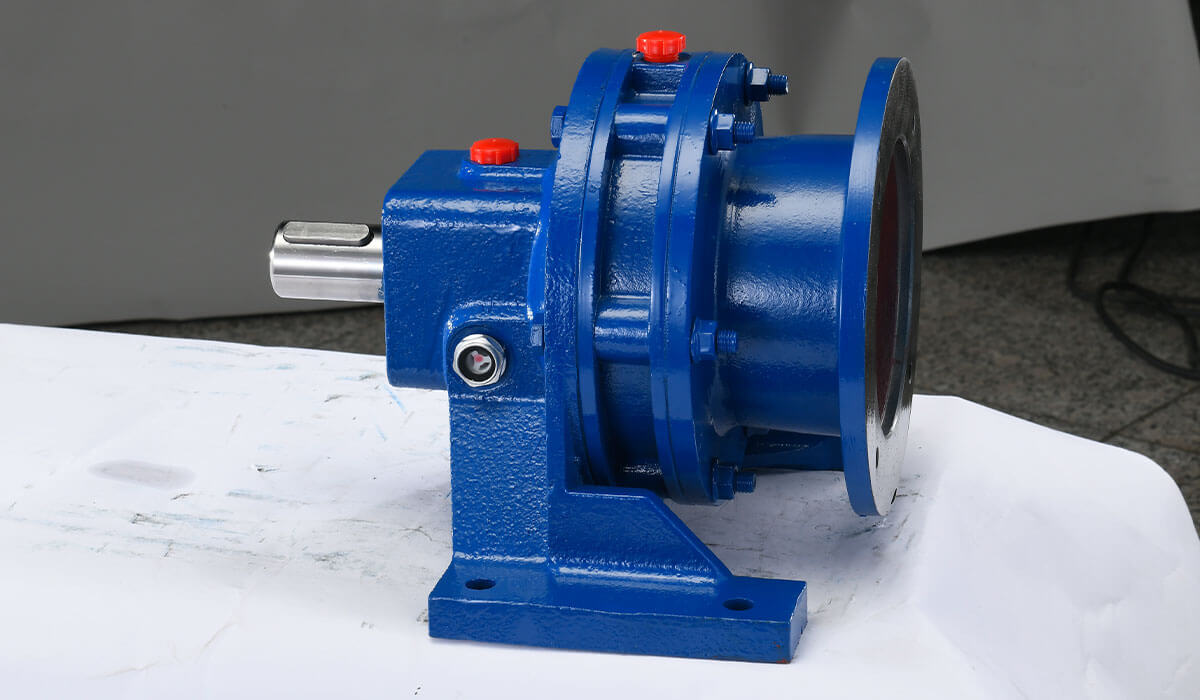
5. Cycloidal gear motor
Cycloidal gear motors use a cycloidal disc mechanism to achieve very high gear ratios in a compact form. They offer exceptional shock load resistance and precision, making them suitable for robotics, indexing equipment, and automation.
At Zhenli Motor, our Cycloidal Reducer Series is designed for high-load, high-precision applications where durability and accuracy are critical.
6. NMRV gear motor
NMRV gear motors are a compact worm gear motor variant featuring an aluminum alloy housing for lightweight, corrosion-resistant performance. They offer high torque, low noise, and easy mounting in multiple orientations.
Zhenli Motor’s NMRV Series gear motors are among our most popular products, trusted by customers in over 80 countries for their versatility, compact design, and long service life.
Components of a gear electric motor
Understanding the key components of a gear electric motor helps you better evaluate performance, select the right model, and carry out effective maintenance.
Electric motor components
- Stator: The stationary part of the motor that generates a magnetic field to interact with the rotor and produce rotation. In AC motors, the stator is powered by alternating current; in DC motors, by direct current.
- Rotor: The rotating part powered by the stator’s magnetic field. It connects to the motor shaft, which drives the mechanical load.
- Commutator (DC motors only): A rotating switch that reverses current direction within the motor to ensure continuous rotation, working alongside the brushes.
- Brushes (DC motors only): Carbon or graphite components that press against the commutator, allowing current to flow from the power source to the rotor.
Gearbox system
- Gear trains: A series of interconnected gears that transmit motion from the motor to the output shaft, determining speed reduction and torque multiplication.
- Gear ratios: The relationship between the input and output gears. A higher gear ratio (e.g., 5:1) reduces speed while increasing torque; a lower ratio does the opposite.
Types of gears
| Gear type | Description |
|---|---|
| Spur gears | Straight teeth, simple design, efficient for low-speed applications |
| Planetary gears | Compact, high torque, excellent load sharing |
| Worm gears | Right-angle transmission, high reduction ratios, self-locking |
Supporting components
- Shaft: Transfers rotational motion from the rotor to the gearbox and the driven load. Typically made of hardened steel for durability.
- Bearings: Reduce friction between moving parts, support the shaft, and extend motor lifespan.
- Housing: The outer casing that protects internal components from dust, moisture, and contaminants, while also helping to dissipate heat.
- Mounting systems: Secure the motor in place, preventing vibration or misalignment during operation.
How gear electric motors work
A gear electric motor combines an electric motor with a gearbox to provide controlled motion, torque increase, and speed reduction. The process occurs in three key stages:
Stage 1: The electric motor generates rotation
When electrical power is supplied, the stator creates a magnetic field that interacts with the rotor, causing it to spin at high speed but with relatively low torque.
Stage 2: The gearbox adjusts speed and torque
The motor shaft connects to a gear train. The gears reduce the rotational speed (RPM) while significantly increasing torque output, making the motor suitable for applications requiring power rather than high speed.
Stage 3: The output shaft transfers motion to the load
The final output shaft delivers the converted rotation to the attached application — whether a conveyor belt, robotic arm, pump, or industrial machine — ensuring efficient and controlled power transmission.
This three-stage process allows a compact, high-speed motor to produce powerful, controlled output without requiring a larger and less efficient motor.
Applications of gear electric motors
Gear electric motors are used across a wide range of industries due to their ability to deliver high torque, controlled speed, and efficient power transmission.
Industrial applications
- Manufacturing Equipment: Powers lathes, milling machines, and CNC equipment for high-precision operations
- Conveyor Systems: Drives material handling systems in logistics, warehousing, and packaging
- Packaging Machinery: Controls sealing, filling, and labeling equipment in food, pharma, and consumer goods industries
- Robotics and Automation: Enables precise, repeatable movement in robotic arms and pick-and-place systems
- Construction & Heavy Machinery: Provides torque for cranes, hoists, and excavators
- Renewable Energy Systems: Used in wind turbines and solar tracking systems for position adjustment
- Textile Industry: Powers weaving, spinning, and cutting machines
Consumer applications
- Home Appliances: Washing machines, dishwashers, and vacuum cleaners
- Automotive Systems: Power windows, windshield wipers, seat adjusters, and sunroof motors
- Electric Bikes & Scooters: Smooth acceleration and energy-efficient speed control for personal transportation
Specialized applications
- Medical Equipment: Hospital beds, dental chairs, and surgical tools requiring precise movement
- Aerospace Systems: Landing gear mechanisms, control surfaces, and actuators
- Precision Instruments: Cameras, microscopes, and optical equipment
- Agricultural Equipment: Automated irrigation, crop harvesting, and seed planting machinery

How to choose the right gear electric motor
Selecting the correct gear electric motor for your application ensures optimal performance, energy efficiency, and long service life. Consider the following factors:
1. Torque requirements
Calculate the load torque required by your application. Choose a motor with a rated output torque that comfortably exceeds your operational demands to allow for peak loads and safety margins.
2. Speed (RPM) requirements
Determine the required output speed. Use the gear ratio to match the motor’s base speed to your target output RPM. Higher gear ratios deliver lower speed with higher torque.
3. Power supply
Consider whether your application runs on single-phase or three-phase AC power, or DC power. This directly determines which motor type is compatible with your system.
4. Mounting and form factor
Select a mounting style — foot mount, flange mount, or shaft mount — that fits your equipment layout. Compact options like NMRV gear motors are ideal when space is limited.
5. Environmental conditions
Consider the operating environment, including temperature range, humidity, dust, and exposure to chemicals. Choose motors with appropriate IP (Ingress Protection) ratings and suitable housing materials (e.g., aluminum for corrosion resistance).
6. Efficiency class
For energy-intensive applications, choose motors with higher efficiency ratings (IE3 or IE4) to reduce energy consumption and operating costs over the motor’s lifetime.
7. Customization needs
If standard models don’t meet your requirements, look for manufacturers that offer customization — such as Zhenli Motor, which provides tailored solutions for junction boxes, casing styles, gear ratios, and more.
Frequently asked questions (FAQ)
Q: What is the difference between a gear electric motor and a regular electric motor?
A regular electric motor outputs high speed with relatively low torque. A gear electric motor integrates a gearbox to reduce speed and multiply torque, making it suitable for heavy-duty and precision applications.
Q: How do I choose the right gear ratio?
The gear ratio depends on the required output speed and torque. A higher gear ratio (e.g., 50:1) gives lower speed but more torque, while a lower ratio (e.g., 5:1) gives higher speed with less torque. Match the ratio to your application’s operational demands.
Q: What is the typical lifespan of a gear electric motor?
With proper maintenance, a quality gear electric motor can last 10–20 years or more. Lifespan depends on operating conditions, load, lubrication practices, and the quality of the motor itself.
Q: Can gear electric motors be used outdoors?
Yes, provided the motor has an appropriate IP rating (e.g., IP55 or IP65) to protect against dust and water ingress. Always check the environmental rating before deploying in outdoor or harsh conditions.
Q: Does Zhenli Motor offer customized gear electric motors?
Yes. Zhenli Motor provides extensive customization options including gear ratios, mounting styles, housing materials, and more. Contact our team to discuss your specific requirements.
Conclusion
Gear electric motors are indispensable across modern industry — delivering high torque, precise speed control, and energy-efficient power transmission in everything from conveyor systems and robotics to medical devices and renewable energy systems.
As a professional electric motor manufacturer based in China, Zhenli Motor offers a comprehensive range of gear motors — including our NMRV Series, Cycloidal Reducers, and WPA Worm Gear Reducers — all backed by CE, SGS, ISO-9001, CCC, and CQC certifications and trusted by customers in 80+ countries worldwide.
Looking ahead, the gear electric motor industry will continue to evolve with advancements in smart technology, energy efficiency, and compact design — and Zhenli Motor is committed to staying at the forefront of these innovations.