
Electric motors are the main components of various machines and systems used across industries. Their performance, reliability, and efficiency are critical to both daily convenience and large-scale industrial operations. Among the wide range of electric motors available, IEC (International Electrotechnical Commission) electric motors stand out as a benchmark for quality and standardization.

IEC motors are designed in accordance with global standards, such as the IEC 60034 series, which specify requirements for performance, testing, safety, and durability. Understanding their unique advantages can help organizations improve operations, reduce energy consumption, and simplify maintenance.
In this article, we will explore the advantages of IEC electric motors, highlighting their superior efficiency, reliable performance, industrial versatility, and adherence to international standards.
Key Advantages of IEC Electric Motors
IEC electric motors offer a wide range of advantages, making them suitable for industrial, commercial, and infrastructure applications.
Standardization and Global Compatibility
IEC motors are built according to international standards, specifying key mounting and shaft dimensions, such as the D-dimension, center height, and flange type, to ensure uniformity in design, performance, and installation.
- Interchangeable Design
Due to standardized specifications, IEC motors can be replaced or upgraded across different brands and regions without requiring mechanical modifications. This allows for easy sourcing and replacement across regions.
- Simplified Supply Chain
IEC motors offers global compatibility, allowing companies to use the same standardized motors worldwide. This reduces the need for multiple spare parts, simplifies inventory management, and supports seamless operations across locations.

High Efficiency and Performance
Energy efficiency is essential for companies trying to reduce costs and their environmental impact. To accommodate a variety of applications, IEC motors are available in several efficiency classifications.
- IE Efficiency Classes
IEC motors are classified into IE1 (Standard), IE2 (High), IE3 (Premium), IE4 and IE5 (Super Premium), according to IEC 60034-30-1. Choosing the higher IE classes result in significantly lower energy consumption and operating costs.
- Durability & Reliable Performance
Built with high-quality materials and precision engineering, IEC motors operate smoothly under varying load conditions. These motors provide long-lasting reliability and minimal downtime even under continuous working conditions.
- Long-term Savings
While high-efficiency motors (IE4/IE5) may have a higher initial investment, they significantly reduce electricity consumption. It often accounts for over 95% of a motor’s total cost of ownership and help companies comply with regional energy regulations and sustainability goals.
Wide Availability, Versatility and Easy Sourcing
Due to international standardization and widespread adoption, IEC motors are readily available from numerous manufacturers worldwide and regionally.
- Wide Range
IEC motors come in a variety of power ratings, sizes, and types—including AC, DC, and three-phase models. It makes them adaptable to a wide spectrum of industrial and commercial applications.
- Industrial Suitability
These motors are commonly used across manufacturing, HVAC systems, pumps, conveyors, and other critical industrial processes. They deliver reliable performance in diverse operational environments.
- Fast Procurement
Due to their popularity, replacement IEC motors can often be obtained quickly from local dealers, reducing downtime and shipping delays.
Easy Maintenance and Longevity
Maintenance is easy due to the uniform construction of IEC motors and the wide availability of standard spare parts.
- Reduced Downtime
Because IEC motors are interchangeable, replacing a failed motor is quick and usually does not require changes to surrounding equipment or configuration. - Anticipated Maintenance
The standardized IEC design makes maintenance predictable and straightforward, allowing technicians to perform routine checks and repairs efficiently. - Long Life Span
By combining high-quality materials, proper thermal management, and standardized design, IEC motors achieve extended operational life. These motors reduce the frequency of replacements and the overall maintenance costs.
Safety and Compliance
IEC motors are designed to meet international safety and environmental guidelines, making them a responsible and compliant choice for modern businesses.
- ATEX and CE certification
Many IEC motors meet ATEX requirements for hazardous environments and carry the CE marking, ensuring safety and compliance with European regulations. - RoHS and Eco-regulations
They often comply with environmental standards, such as RoHS, which reduces hazardous materials and makes them a sustainable option for businesses seeking to meet their ESG goals. - Protection and Enclosure
With defined Ingress Protection (IP) ratings—such as IP55 and IP66—IEC motors are built to resist dust, water, and other harsh environmental conditions.
Related reading:
IEC electric motor applications
IEC motors assist a variety of mechanical systems across a wide range of industries, from farms to factories.
Industrial Automation and Manufacturing
Industries rely heavily on electric motors to power machines, tools, and processing equipment.
Key Applications:
- Conveyor belts and packaging lines
- Machine tools (lathes, milling machines)
- Injection molding machines
- Automated assembly equipment
HVAC & Building Services
IEC motors operate quietly and efficiently, which is crucial for comfort and energy conservation.
Key Applications:
- Fans and blowers
- Air handlers
- Chillers and compressors
- Cooling towers
Water and Wastewater Treatment
IEC motors are commonly used in facilities where pumping, mixing, and aeration are required to regulate water flow and treatment processes.
Key Applications:
- Centrifugal and submersible pumps.
- Sludge mixers and agitators.
- Blowers for aeration systems.
- Chemical feed equipment.
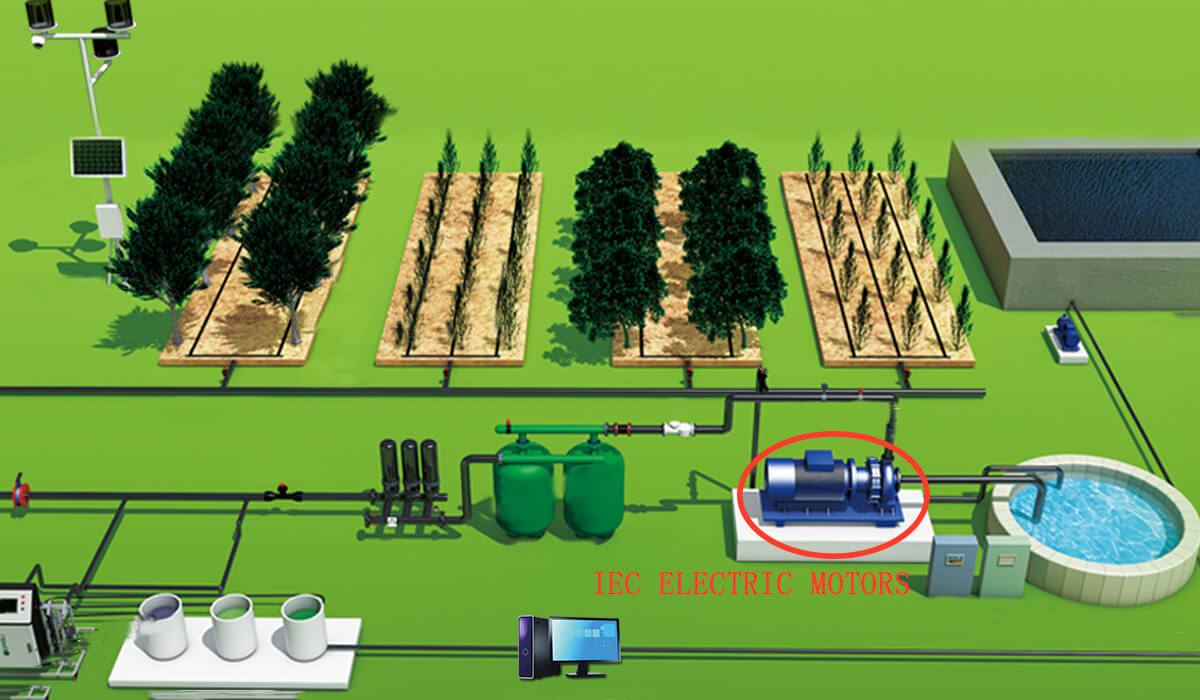
Agriculture and Irrigation
In agricultural settings, IEC motors help automate tasks and power essential equipment, increasing productivity and reducing manual labor.
Key Applications:
- Irrigation pumps and sprinkler systems.
- Grain elevators and feed mixers.
- Milking machines.
- Greenhouse ventilation systems.
Mining and Heavy Industry
Mines and heavy industrial sites require powerful motors that can withstand harsh environments, including dust, moisture, vibration, and extreme temperatures.
Key Applications:
- Crushers and conveyors
- Winches and hoists
- Compressors and fans
- Slurry pumps
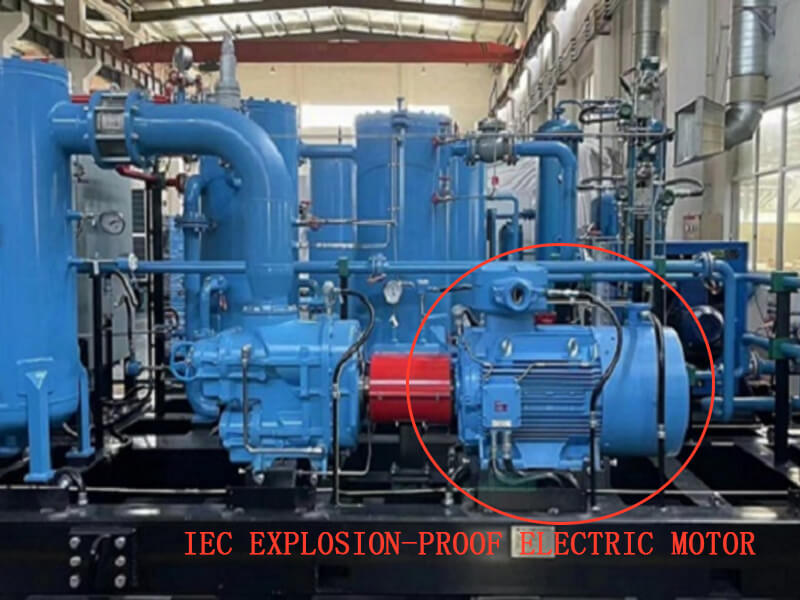
Oil and Gas Sector
In hazardous locations such as refineries and drilling rigs, IEC motors are installed in explosion-proof enclosures and comply with ATEX standards to ensure safety and compliance.
Key Applications:
- Pumping crude oil and gas.
- Compressors in pipeline systems.
- Offshore platform equipment.
- Refinery process automation.
Food & beverage processing
IEC motors come in smooth, cleanable surfaces, and their compliance with hygiene regulations makes them ideal for hygienic environments.
Key Applications:
- Mixers and blenders
- Conveyor systems
- Packaging machines
- Refrigeration units
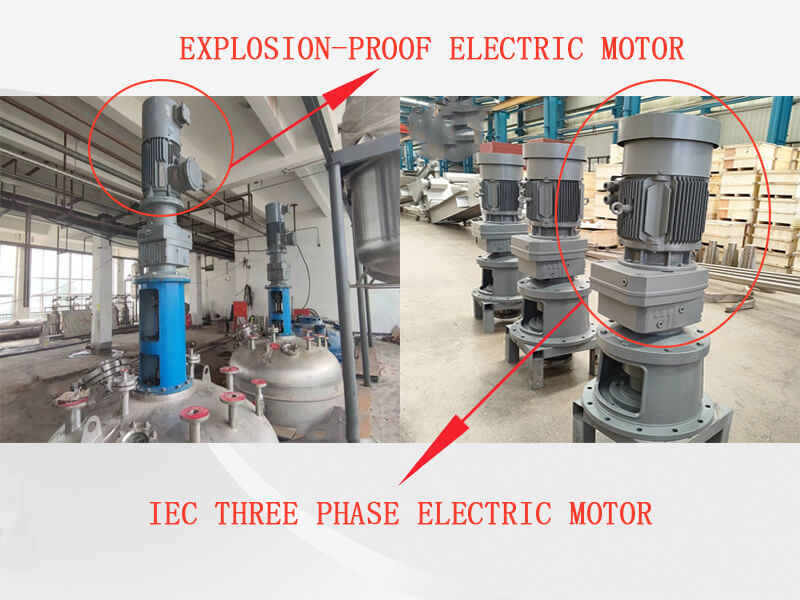
Renewable Energy and Utilities
Due to their reliability and energy-saving capabilities, IEC motors are increasingly being used in renewable energy projects and public utility systems.
Key Applications:
- Solar tracking systems
- Wind turbine blade positioning
- Hydroelectric dam mechanisms
- Power plant auxiliary systems
Transportation and logistics
The transportation industry also benefits from IEC motors in both infrastructure systems and vehicle-related applications.
Key Applications:
- Escalators and elevators
- Airport conveyor systems
- Railway maintenance equipment
- Automated storage and retrieval systems
Conclusion
IEC electric motors offer a powerful combination of global standardization, energy efficiency, durability, and versatility. They are an excellent option for many industries due to their versatility, ease of modification, and compatibility with cutting-edge technologies.
For businesses and engineers seeking to optimize performance and future-proof their operations, choosing IEC-compliant motors from trusted manufacturers like Zhenli Motor can be a wise decision. Contact us today to select the right solutions tailored to your specific needs.
FAQs
What makes IEC electric motors different from other types?
IEC electric motors are manufactured to globally recognized standards set by the International Electrotechnical Commission. This ensures uniform sizing, mounting, and performance, allowing for interchangeability among manufacturers and easy international sourcing.
Can IEC motors be used in the US?
While the US primarily follows NEMA (National Electrical Manufacturers Association) standards, IEC motors can still be used with appropriate mechanical and electrical compatibility adjustments. This is especially common in equipment imported from Europe or Asia.
Are IEC motors easy to maintain?
Absolutely. Their standardized and modular design makes them easy to inspect, repair, and replace. Standard parts are widely available, and many maintenance teams are already trained in their service procedures.