
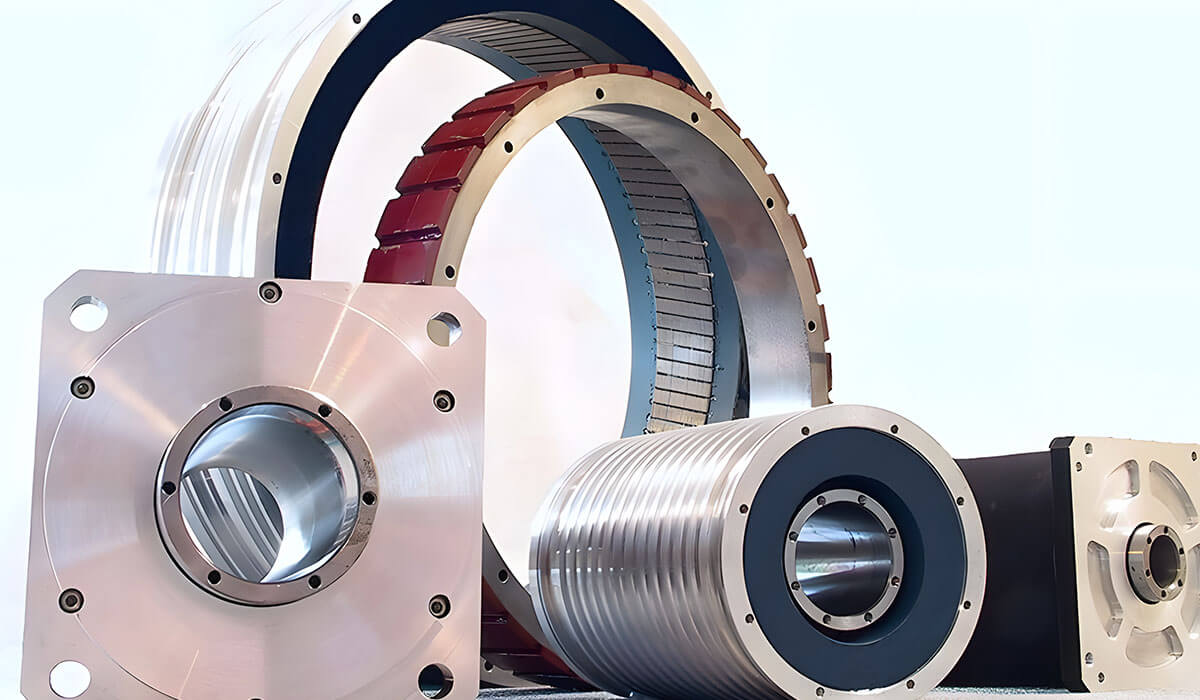
Electric motors are the backbone of countless machines and devices we use every day — from home appliances to electric vehicles and modern manufacturing systems. Imagine sitting behind the wheel of an electric car, pressing the accelerator, and feeling the vehicle surge forward almost instantly. That effortless burst of motion comes from one key factor—torque.
Often described as the rotational force, torque plays a vital role in determining a motor’s power and efficiency. Think of it as the twisting force you apply when turning a wrench—the harder you twist, the more torque you generate, and the easier it becomes to move something. In electric motors, torque is what transforms electrical energy into usable motion. It determines how quickly a motor can start, how much load it can handle, and how smoothly it can deliver power.
This principle isn’t limited to cars. From the precise movements of industrial robots, to the strength of heavy-duty machinery, to the convenience of everyday appliances, torque is at the heart of how electric motors shape our modern world. In this article, we’ll break down the concept of torque in electric motors, explain how it works, explore different types of torque, and highlight its importance across industries. By the end, you’ll have a clear understanding of why torque is a driving force—both literally and figuratively—behind today’s innovations.
What is torque in electric motors?
In electric motors, torque is the rotational force that causes the motor shaft to turn. Simply put, it’s the force that rotates an object around an axis — in this case, the motor’s output shaft. Just as linear force moves an object in a straight line, torque rotates it around a pivot point.
Torque is usually measured in newton meters (Nm) in the metric system or pound-feet (lb · ft) in the imperial system. The higher the torque, the stronger the rotational force a motor can provide. Understanding torque is crucial when selecting the right motor for applications that involve heavy loads, high speeds, or precise movements.
The physics behind torque
According to physics, torque is expressed by the equation:
Torque (τ) = Force (F) × Distance (r)
- F: Applied force (in newtons)
- r: Distance from the axis of rotation
- τ: Torque (in newton meters)
This means torque depends on the applied force and the distance of that force from the axis of rotation. For example, using a longer wrench allows you to generate more torque with the same force, making it easier to turn a bolt.
In electric motors, torque is created through electromagnetic interaction. When electric current flows through the windings, it generates a magnetic field. This field interacts with the stator and rotor, producing a force that turns the rotor. The resulting torque drives mechanical loads such as fans, elevators, or the wheels of an electric car.
The amount of torque produced by a motor depends on factors like the strength of the magnetic field, the current in the windings, and the motor’s geometry (such as the radius over which force is applied).
Torque, power, and speed
Torque in motors is also closely linked to power and speed. The formula is:
T = (P × 60) / (2πN)
- T: Torque (Nm)
- P: Power (watts)
- N: Speed (revolutions per minute, RPM)
This shows that torque increases with power but decreases as speed rises, which is why balancing torque and speed is essential for efficiency.
It’s also important to distinguish torque from horsepower. Torque is the raw twisting force that gets things moving, while horsepower measures how quickly that torque is applied over time. For example, a truck pulling a heavy load uphill demonstrates high torque, while a race car reaching top speed demonstrates high horsepower.
Types of torque in electric motors
Electric motors don’t deliver a single, fixed torque value — they produce different levels of torque depending on their operating conditions. Each type of torque plays a distinct role in performance and must be considered when selecting or analyzing a motor for real-world applications. The main types include:
Starting torque (locked-rotor or breakaway torque)
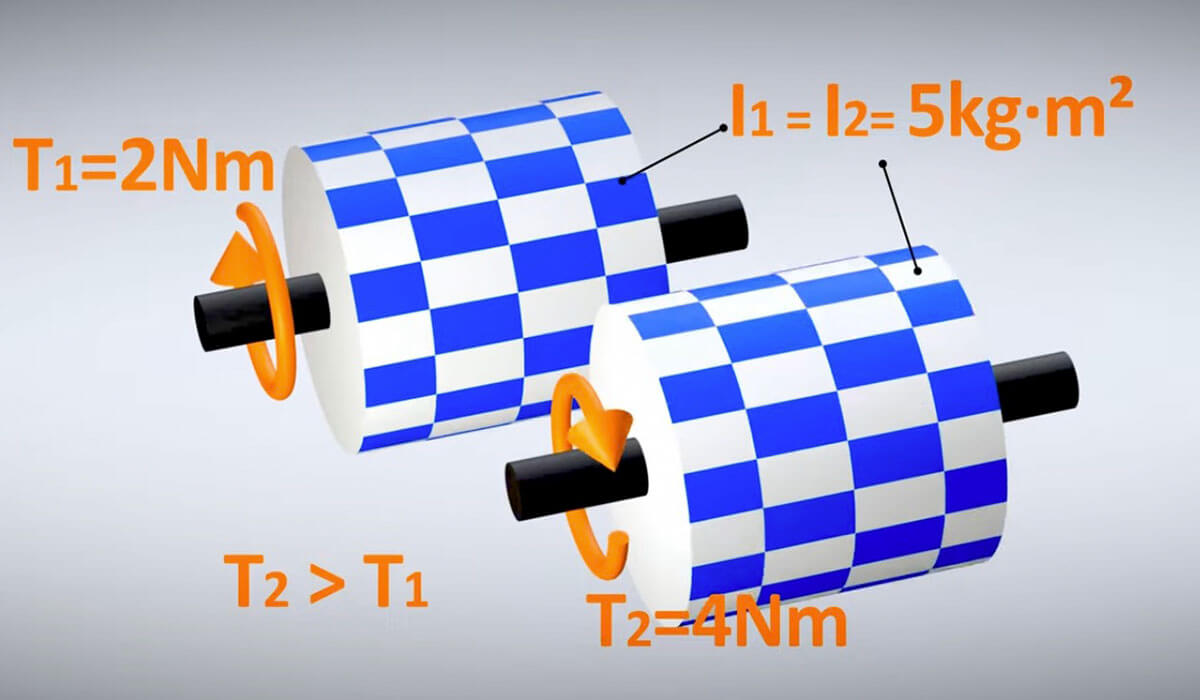
Starting torque is the initial torque a motor produces when starting from a complete stop. It is the force needed to overcome the inertia of a stationary load and set it in motion. This is crucial in applications such as elevators, compressors, conveyors, or electric trains — where heavy or fully loaded systems must move right away. Motors with high starting torque, like DC series motors, are particularly suited for such tasks.
Running torque (rated or full-load torque)
Running torque, also called rated or full-load torque, is the torque a motor produces under normal operating conditions at a constant speed. It ensures the motor can continuously deliver power without overheating or stalling. This value is specified by the manufacturer and is vital for selecting the right motor for an application. If the required load torque exceeds the rated torque, the motor risks overheating or failing prematurely.
Peak torque (breakdown torque)
Peak torque, also known as breakdown torque, is the maximum torque a motor can generate for a short time before stalling or losing synchronous speed. It is typically used during sudden load spikes, acceleration, or brief overloads. However, motors cannot sustain peak torque for long, as doing so can cause overheating and shorten their lifespan.
Continuous torque (constant torque)
Continuous torque is the maximum torque a motor can deliver indefinitely without overheating, assuming proper cooling conditions. This is critical in continuous-duty applications like pumps, mixers, and conveyors. Motors with forced-air or liquid cooling can achieve higher continuous torque than those relying solely on natural cooling.
Torque-speed curve explained
The relationship between torque and speed in an electric motor is shown in the torque-speed curve, which highlights how the motor performs under different conditions. A typical curve includes the following regions:
Starting region
At zero speed, the motor delivers its starting torque — the extra force needed to overcome inertia and set the load in motion.
Acceleration region
As the motor picks up speed, torque usually decreases. This is the transition phase, where the motor builds up toward its rated operating point.
Rated operating point
Here, the motor runs under normal conditions, delivering its rated torque at rated speed. This steady-state operation is where the motor is most efficient and reliable.
Breakdown and stall
If the load increases beyond safe limits, the motor may briefly reach its breakdown torque — the maximum torque it can produce before losing stability. Beyond this point, the motor stalls, meaning it can no longer rotate.
The torque-speed curve is an essential tool for engineers, as it helps ensure the right balance of starting strength, operating stability, and overload protection when selecting a motor for specific applications.
Factors affecting motor torque
The torque produced by an electric motor is not fixed — it depends on several key factors that influence how much rotational force the motor can generate. Understanding these factors is essential for selecting the right motor for your application.
Current
Torque is directly proportional to the current flowing through the motor windings. More current produces a stronger electromagnetic force, which increases torque. For example, when an electric vehicle accelerates quickly, the motor draws more current to deliver the extra torque needed for instant motion.
Supply voltage
In DC motors, torque is directly proportional to the supply voltage. Higher voltage provides more electrical energy to the windings, generally resulting in greater torque up to the motor’s rated capacity. In AC motors, both voltage and frequency play a role — higher voltage increases torque, while frequency affects the balance between torque and speed. Variable frequency drives (VFDs) are often used to optimize this relationship.
Magnetic field strength
Torque depends on the strength of the motor’s magnetic field. Stronger magnets or field windings produce more powerful interactions between the stator and rotor, resulting in higher torque. Motors with high-quality magnets or optimized winding designs perform better under demanding loads.
Motor design
Internal design parameters such as winding configuration, number of poles, coil turns, and rotor construction all impact torque output. For instance, motors with more poles tend to deliver smoother torque at lower speeds, making them suitable for applications like robotics or precision systems.
Load characteristics
The load connected to the motor also determines torque demand. Constant-torque loads, such as conveyors, require a steady torque across all speeds. Variable-torque loads, such as fans and pumps, require less torque at low speeds but much higher torque at higher speeds. Matching motor design to load type ensures efficiency and prevents premature wear.

Applications where torque matters most
Torque is more than just a technical term — it’s the force that makes machines and devices useful across industries and in daily life. From transportation to manufacturing, the right torque ensures performance, safety, and efficiency. Key applications include:
Electric vehicles
In EVs, torque is what delivers instant acceleration when you press the pedal. Unlike combustion engines that need to build up power, electric motors provide torque immediately for smooth, responsive driving. High torque also supports towing capacity in trucks and SUVs, ensuring they can handle heavy loads.
Industrial equipment
Heavy-duty machines such as cranes, lifts, pumps, conveyors, and hoists depend on torque to move massive loads. High starting torque is essential for lifting steel beams on a construction site, while steady torque keeps materials flowing smoothly in factories.
Industrial robotics
Robots require precise torque control to achieve accurate, repeatable movements. Servo motors are often used to provide the right balance of speed and torque, whether in assembly lines, packaging, or medical robotics for delicate procedures.
CNC machines
CNC tools rely on constant torque to cut or mill through materials of varying density. Without consistent torque, tool performance and product quality can be compromised.
Household appliances
Torque also plays a role in daily life. Washing machines need torque to spin heavy loads of wet clothes, drills require torque to bore into wood or metal, and blenders depend on torque to process food efficiently. Even simple fans rely on torque to run smoothly.
How is torque measured and controlled?
To design efficient systems and ensure reliable performance, engineers must both measure and control the torque produced by electric motors. Accurate torque measurement and real-time control allow optimization of efficiency, safety, and performance across applications.
Measuring torque
Torque can be measured using several methods:
- Torque sensors/dynamometers: Devices mounted on the motor shaft that directly detect rotational force and convert it into readable units. These are common in testing and research.
- Strain gauges: Sensors that measure shaft deformation under load, providing highly accurate torque readings.
- Indirect calculation: In many applications, torque is not measured directly but calculated using motor parameters such as power, speed, current, and voltage. For example:
T = (P × 60) / (2πN), where torque depends on measurable values of power and rotational speed.
These measurements are critical in industries like automotive, aerospace, and robotics, where precise torque data ensures consistent performance.
Controlling torque
Modern electric motors use advanced control systems to regulate torque according to demand:
- Variable frequency drives (VFDs): Used in AC motors to adjust voltage and frequency, allowing precise control of speed and torque.
- Servo drives: Common in robotics and CNC machinery, where feedback loops constantly monitor and adjust torque for precision.
- Closed-loop control systems: Integrate sensors to provide real-time data, ensuring torque remains at optimal levels as loads change.
Advanced torque control techniques
To further enhance performance, advanced strategies are applied:
- Vector control (field-oriented control, FOC): Separates torque-producing current from flux-producing current, delivering smooth and efficient torque across varying speeds. Widely used in EVs and precision equipment.
- Direct torque control (DTC): Regulates torque and flux directly without complex transformations, offering fast response and high efficiency.
These methods ensure motors respond quickly to load changes, reduce energy waste, and improve reliability in demanding applications.
Conclusion
Torque is more than just a technical parameter—it’s the core force that transforms electrical energy into motion, defining how and why electric motors perform. From its scientific foundation—force multiplied by distance—to its practical roles in starting, running, and peak performance, torque determines whether a motor can move heavy loads, deliver instant acceleration, or provide precise control. Across industries like EVs, robotics, and industrial machinery, getting torque right is essential for efficiency, reliability, and innovation.
As a professional electric motor manufacturer in China, Zhenli Motor designs and engineers motors with optimized torque characteristics to meet diverse industry needs. By leveraging advanced materials, innovative control systems, and precision manufacturing, we ensure consistent, high-performance torque delivery across applications—from mobility to automation to everyday appliances.
Looking ahead, torque will remain central to the evolution of electric mobility, smart automation, and renewable energy systems. At Zhenli Motor, we are committed to powering this transition with efficient, reliable, and sustainable motor solutions.
Partner with Zhenli Motor today and let our expertise in torque-driven performance help your applications achieve the power, precision, and efficiency they demand.