
AC motors – short for Alternating Current motors – are a vital component of modern industry, commercial operations, and home appliances. They convert electrical energy into mechanical motion, making them one of the most widely used machines in the modern world. From ceiling fans, washing machines, and air conditioners to conveyor belts and heavy-duty machinery in factories, these motors deliver efficient and reliable power where it’s needed most.
At Zhenli Motor, we understand how essential AC motors are in today’s fast-paced world. Their versatility, efficiency, and reliability have made them the backbone of countless applications, from simple tools to complex automated systems.
In this blog post, we’ll explore the types of AC motors, examine how they work, and highlight their uses in real-world applications across a variety of industries. This guide will provide you with a solid foundation for understanding these versatile machines, whether you are an engineer, a student, a distributor, or a hobbyist.
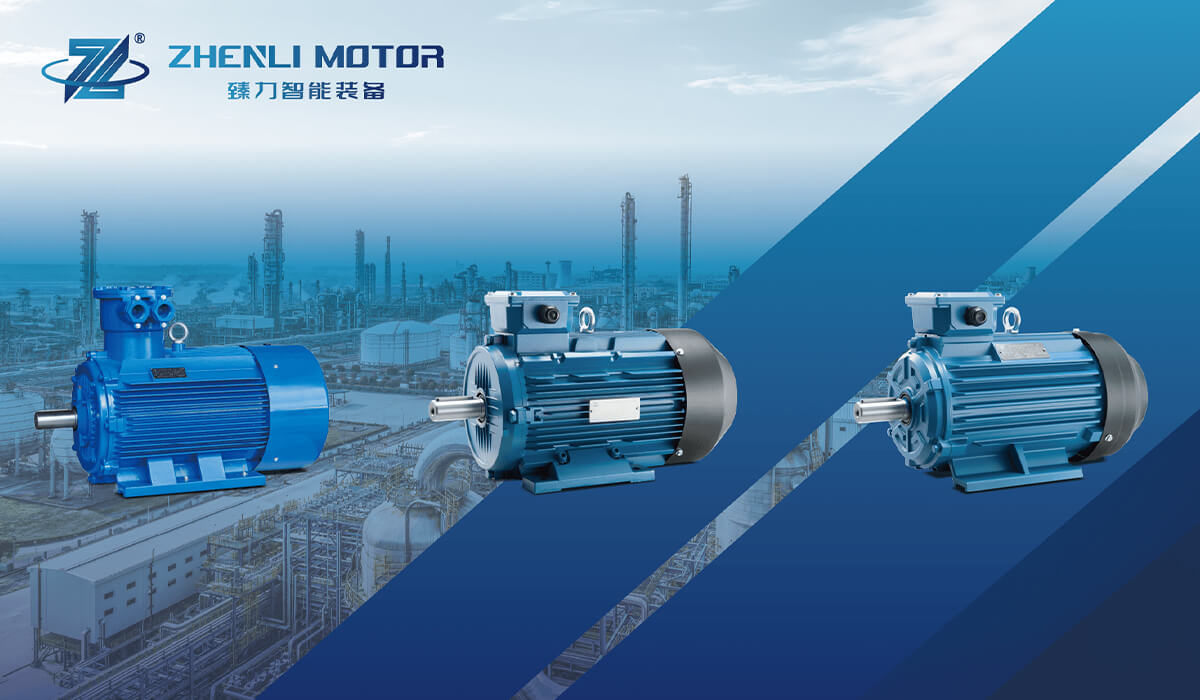
What is an AC motor?
AC motors are often called the workhorses of modern technology — and for good reason. They operate using an alternating current power supply to convert electrical energy into mechanical motion, powering everything from small household appliances to large-scale industrial machines. Their ability to deliver consistent and reliable performance has made them one of the most important inventions in the history of engineering.
Key working principle
The principle behind AC motors lies in electromagnetic induction. When alternating current flows through the stator windings, it creates a rotating magnetic field (RMF). This magnetic field interacts with the rotor, causing it to spin and produce mechanical motion. In synchronous motors, the rotor aligns with the magnetic field, while in induction motors, current is induced in the rotor. This elegant principle, pioneered by inventors like Nikola Tesla, played a key role in the global shift from direct current (DC) to alternating current (AC) systems.
Basic components
- Stator – the stationary part of the motor that generates the rotating magnetic field when supplied with AC power.
- Rotor – the rotating part that responds to the magnetic forces and delivers motion to the mechanical load.
- Housing and Bearings – provide support, maintain alignment, and reduce friction during operation.
- Power Supply – the alternating current source that energizes the system.
Thanks to this simple yet effective design, AC motors provide efficiency, reliability, and versatility, making them indispensable in both daily life and industrial growth.
Types of AC motors
AC motors come in many forms, each designed to meet specific needs in both household and industrial applications. At Zhenli Motor, we manufacture a wide range of AC motors built for efficiency, reliability, and versatility. Broadly, AC motors can be classified based on their operating principle:
Induction motors (asynchronous motors)
Induction motors are the most popular type of AC motor worldwide. The rotor does not rotate at the same speed as the stator’s magnetic field, which is why they are called asynchronous motors. Known for their affordability, durability, and simple design, they are widely used in both commercial and industrial applications.
Synchronous motors
Synchronous motors operate at a constant speed that is synchronized with the supply frequency. They require external excitation or permanent magnets to maintain their speed, making them ideal for applications where precision and consistent operation are critical.
Specialty AC motors
Beyond the two main categories, there are specialty AC motors designed for unique applications. These include servo motors, linear motors, and other customized designs that meet specific performance requirements in automation, robotics, and advanced machinery.
Synchronous motors
A synchronous motor is an AC motor in which the rotor rotates at exactly the same speed as the stator’s rotating magnetic field, known as synchronous speed. This is achieved by supplying DC excitation to the rotor or by using permanent magnets. Once synchronized, the motor maintains this speed regardless of load, making it ideal for applications requiring constant and precise operation.
Types of synchronous motors
- Electrically Excited Synchronous Motors: Use a DC supply to excite the rotor winding, commonly applied in large-scale industrial machinery where high power is needed.
- Permanent Magnet Synchronous Motors (PMSM): Use permanent magnets embedded in the rotor, making them efficient and compact, widely used in electric vehicles, robotics, and automation.
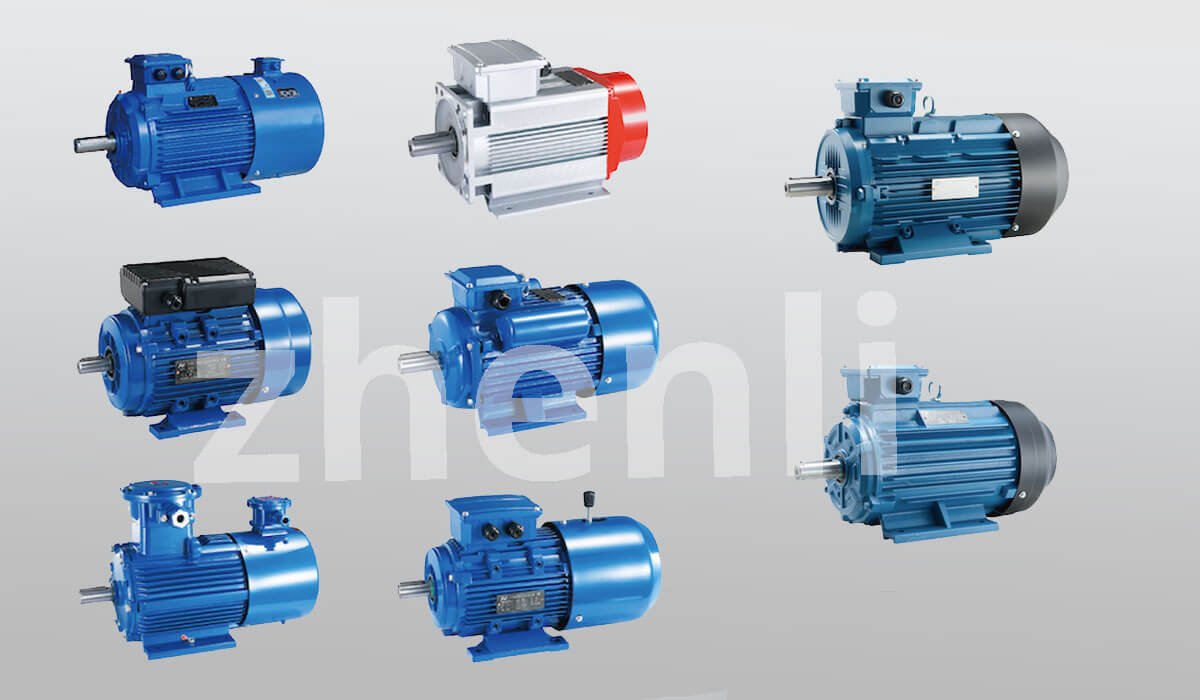
Applications of synchronous motors
Because they operate at a fixed speed, synchronous motors are used in:
- Timing devices (e.g., clocks)
- Paper mills and printing presses
- Elevators and compressors
- Robotics and electric vehicles
- Power factor correction in electrical systems
In industrial environments, they are often chosen to drive equipment that requires a constant rotational speed.
Advantages of synchronous motors
- Constant speed under varying loads
- High efficiency at full load
- Precision control in automation and manufacturing
- Improved power factor due to DC excitation
Induction motors (asynchronous motors)
The induction motor, often called an asynchronous motor, is the most widely used type of AC motor. Unlike synchronous motors, the rotor here does not run at the exact synchronous speed. Instead, there is a small difference known as slip, which allows the motor to generate torque. These motors are valued for their simple, robust design, affordability, and reliable performance, making them the go-to choice for both residential and industrial applications.
How induction motors work
When AC passes through the stator coils, it creates a rotating magnetic field. This magnetic field cuts through the rotor conductors, inducing a current in them (Faraday’s Law). The interaction between the magnetic field from the stator and the field created by the induced rotor current causes the rotor to rotate.
Types of induction motors
Single-phase induction motors
- Design & Characteristics: Simple construction, compact, affordable, and easy to maintain. Require auxiliary mechanisms (e.g., a starting capacitor or shaded pole) to begin rotation since a single-phase supply does not create a rotating magnetic field.
- Common Applications: Fans, blowers, portable tools, pumps, washing machines, and refrigerators.
Three-phase induction motors
- Design & Characteristics: Powered by a three-phase AC supply, more robust and efficient, capable of handling large loads. They are self-starting, eliminating the need for external starting devices.
- Common Applications: Industrial elevators, conveyors, pumps, compressors, and large HVAC systems.
Squirrel cage induction motors
- Design & Characteristics: Rotor shaped like a cage, rugged and simple in structure, highly reliable, and low maintenance.
- Common Applications: Pumps, blowers, fans, and general industrial machinery.
Wound rotor induction motors
- Design & Characteristics: Rotor windings are connected through slip rings, offering high starting torque and adjustable speed control.
- Common Applications: Cranes, hoists, elevators, and heavy-duty industrial equipment.
Advantages of induction motors
- Simple and robust design with fewer mechanical failures
- Cost-effective to manufacture and install
- Low maintenance (no brushes or commutators)
- Reliable, long-lasting performance across applications
Specialty AC motors
Beyond synchronous and induction motors, there are several specialty AC motors designed for unique applications in commercial, domestic, and automated systems. These motors are built to perform specific tasks that require unique characteristics such as high speed, precision, or linear motion.
Shaded pole motors
- Design & characteristics: Small, inexpensive single-phase motors with simple construction. A portion of the stator pole is wrapped with a copper shading ring to create the necessary phase shift for rotation.
- Applications: Small fans, microwave oven blowers, desk fans, and bathroom exhausts.
Universal motors
- Design & characteristics: Can operate on both AC and DC power supplies. They provide high speed and torque but are noisy and prone to wear. Lightweight and compact in design.
- Applications: Hair dryers, electric drills, kitchen mixers, and portable appliances.
Servo motors
- Design & characteristics: High-performance motors used in feedback-controlled systems for precise control of positioning, speed, and acceleration. Highly responsive with excellent accuracy.
- Applications: Robotics, CNC machinery, aerospace systems, and antenna tracking.
Stepper motors
- Design & characteristics: Move in precise steps rather than continuous rotation, making them ideal for digital control systems.
- Applications: Printers, medical devices, CNC machines, and 3D printers.
Linear induction motors
- Design & characteristics: Instead of rotary motion, these motors generate linear (straight-line) motion using the same electromagnetic induction principle.
- Applications: Maglev trains, automated transport systems, and sliding doors.
Conclusion
AC motors are the backbone of modern technology, powering everything from household appliances to advanced industrial systems. Their simplicity, efficiency, durability, and adaptability make them indispensable across countless applications — whether in fans, pumps, compressors, HVAC systems, electric vehicles, or cutting-edge robotics.
Among the most common types, synchronous motors are valued for their precision and constant speed, while induction motors — rugged, cost-effective, and versatile — are the most widely used worldwide. Beyond these, specialty motors such as servo, stepper, and linear induction motors expand the possibilities for automation, robotics, and transportation.
Looking ahead, the future of AC motors lies in high-efficiency designs, variable-frequency drives (VFDs), and smart technologies such as IoT integration and predictive maintenance. These innovations will make AC motors more intelligent, sustainable, and reliable, aligning with the growing demand for energy efficiency and automation.
At Zhenli Motor, a professional electric motor manufacturer in China, we are committed to delivering advanced, future-ready motor solutions that meet the evolving needs of modern industries. If you’re looking for reliable and efficient AC motors, partner with us today — and let’s drive innovation together.